
Blog
Czynsz in Poland: What it is, what it's made of, and why it's so different

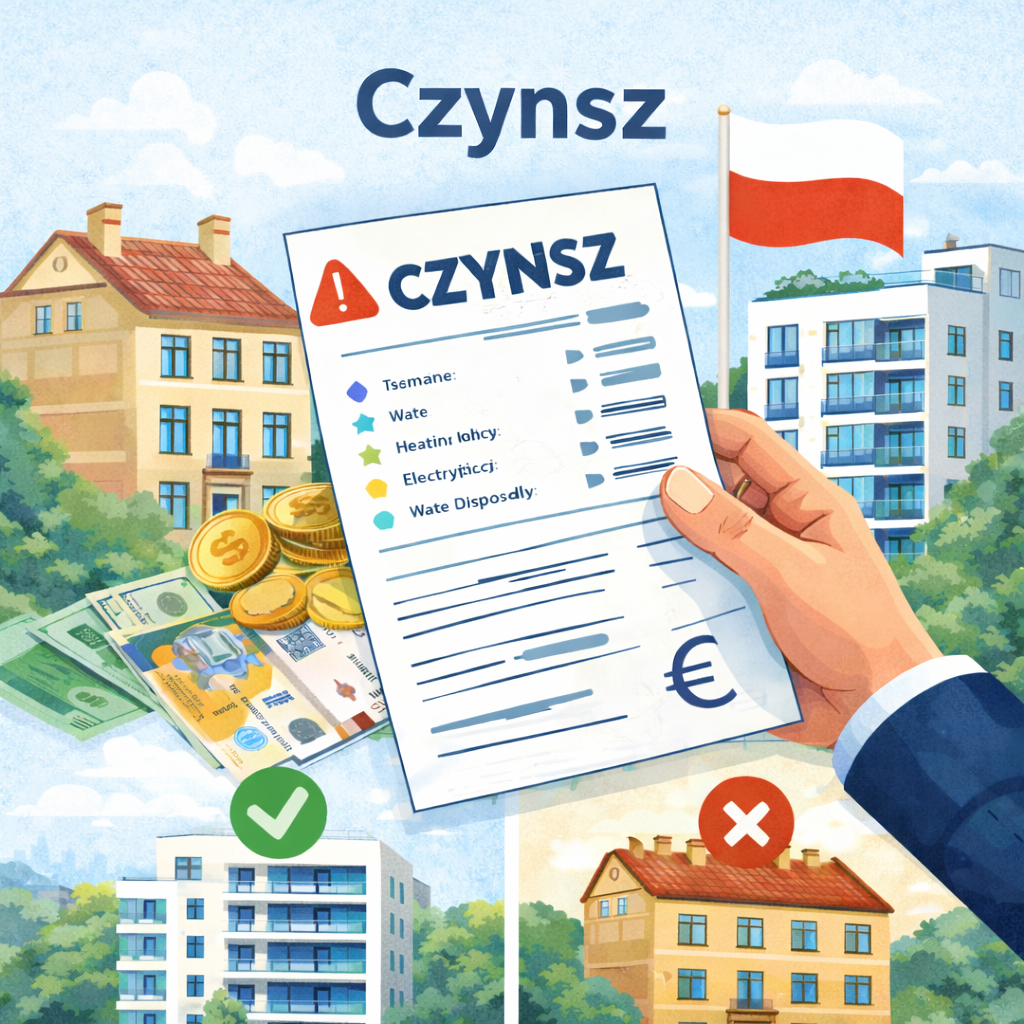
If you rent or buy an apartment in Poland, you will very quickly come across the concept czynsz. For many foreigners (and even Poles), this word causes confusion: some think it's rent, others think it's all the utility bills. In fact, czynsz is a separate and very important part of monthly housing expenses.
In this article we will examine in detail:
- What is czynsz in Poland;
- what does it consist of;
- What are the differences in payments in old and new buildings?;
- Why is czynsz often more expensive in older housing stock?;
- what's happened bezczynszowe mieszkanie;
- What to look for when renting and purchasing real estate.
This article will be useful for those who live in Poland, invests in real estate or is just planning to move.
What is czynsz in Poland?
Czynsz - This monthly mandatory payment, which the owner or tenant of the apartment pays housing community (wspólnota mieszkaniowa) or housing cooperative (spółdzielnia).
Important:
- czynsz is not a rental (rent = czynsz najmu);
- czynsz is not all about utilities, and part of them;
- its size does not directly depend on whether you live in an apartment or not.
Even if the apartment is empty, you still have to pay rent.
What does czynsz consist of?
The composition of the czynsz may vary slightly depending on the building, city, and management company, but most often it includes:
1. Operating costs
- cleaning of entrances and common areas;
- lighting of stairs, basements, and areas;
- minor routine repairs;
- elevator maintenance.
2. Repair fund (fundusz remontowy)
One of the most important points.
This is an accumulation fund from which the following are paid:
- major repairs;
- roof replacement;
- facade insulation;
- replacement of risers, electrical wiring, elevators.
👉 In old houses fundusz remontowy almost always high, which directly increases czynsz.
3. Central heating (CO)
In many houses, heating is included in the czynsz in the form of advance payments.
Later:
- recalculation is taking place;
- If you spent less, you get your money back;
- If more, you need to pay extra.
4. Cold and hot water
Often water is also included in the czynsz in advance.
Calculation:
- by meters;
- with periodic recalculation (usually once or twice a year).
5. Garbage removal (śmieci)
The size depends on:
- number of registered people;
- rules of a specific commune;
- waste sorting.
6. Administrative expenses
- work of the management company;
- accounting;
- legal support;
- insurance of common parts of the building.
What is usually NOT included in czynsz
The following are paid separately:
- electricity;
- gas (if individual heating or stove);
- Internet and TV;
- parking space (sometimes).
That is why the adverts «czynsz 800 zł» do not mean that it is all expenses for the apartment.
Why is the temperature in older houses often higher?
Many people are surprised why the price of old houses (kamienice, wielka płyta) is higher than in new investments.
Main reasons:
1. High fundusz remontowy
Old buildings require constant investment:
- pipes;
- roofs;
- facades;
- elevators.
2. Old heating systems
- low energy efficiency;
- large heat losses;
- obsolete nodes.
3. Large common areas
Wide stairs, basements, attics - all this needs to be maintained and illuminated.
4. Management via spółdzielnię
Cooperatives often have:
- more administrative costs;
- less flexible cost structure.
Czynsz in new homes
In new residential complexes czynsz usually:
- below at the start;
- more transparent;
- better controlled.
Reasons:
- the new building does not require major repairs;
- better thermal insulation;
- modern elevators and systems;
- smaller fundusz remontowy (in the first years).
⚠️ Important: after 10–15 years, czynsz in new houses almost always grows.
What is bezczynszowe mieszkanie
Bezczynszowe mieszkanie - this is an apartment in which there is no classic czynsz.
Typically it is:
- townhouses;
- homes in small communities;
- apartments with separate entrance;
- some houses with a share in the land.
What do owners of rent-free apartments pay?
- only actual utility services;
- sometimes - a minimum fee for maintenance of the territory;
- individual bills for heating, water, electricity.
Pros
- lower monthly expenses;
- full cost control;
- absence of spółdzielni.
Cons
- all repairs are at your own expense;
- you need to manage the house yourself;
- not always suitable for investments for rent.
Czynsz when renting an apartment
If you rent an apartment, you typically pay:
- rent to owner;
- czynsz in wspólnocie;
- additional counters.
The ads often say:
czynsz: 700 zł + media
Always clarify:
- what exactly is included in czynsz;
- How many people are the advances calculated for?;
- Were there any recalculations last year?.
What to look for when buying an apartment
Before purchasing, please be sure to:
- request aktualny czynsz;
- look at the size of the fundusz remontowy;
- find out about planned repairs;
- check debts wspólnoty.
Low czynsz today does not always mean low costs tomorrow.
Result
Czynsz in Poland is a key element of the cost of owning and renting real estate.
It depends on:
- age of the building;
- control method;
- house conditions;
- amount of total expenses.
Understanding the structure of czynsz allows you to:
- avoid unpleasant surprises;
- calculate the budget correctly;
- make a more profitable investment.
If you are planning buying or renting real estate in Poland and want to understand the details - competent realtor will help to evaluate not only the price of the apartment, but also actual monthly expenses.
One thought on “Czynsz в Польше: что это, из чего состоит и почему он такой разный”